Blog Mawjoudin

Elementor #7667

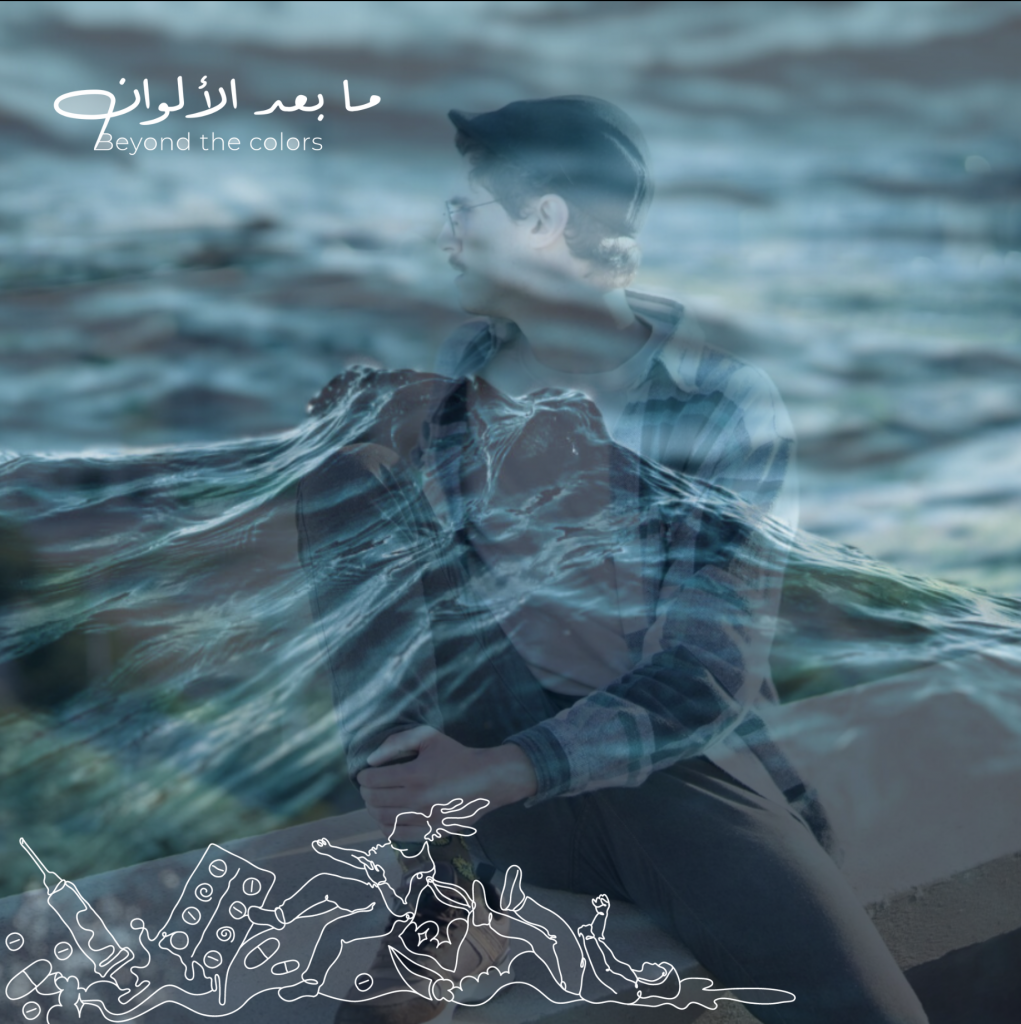
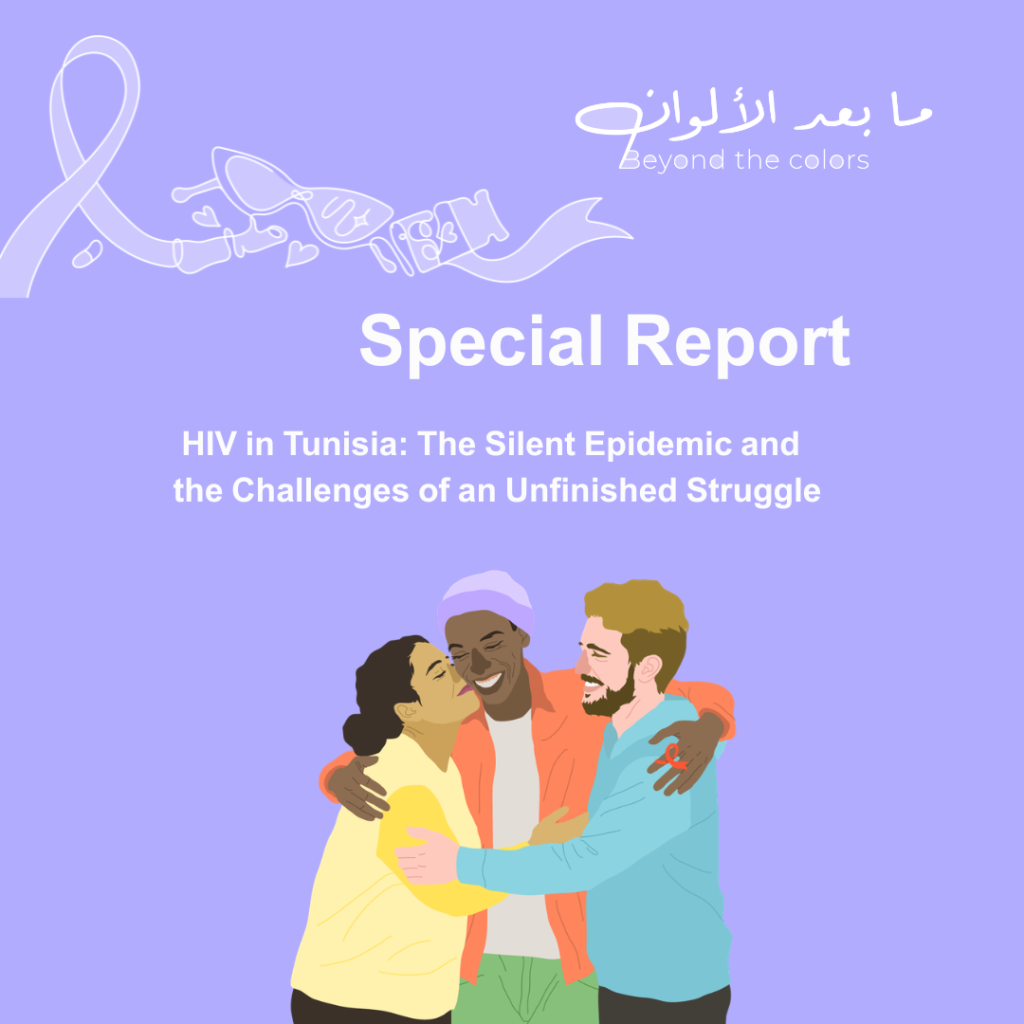
Beyond colors, Blog Mawjoudin July 24, 2026 Beyond the Colors HIV in Tunisia: The Silent Epidemic and the Challenges of an Unfinished Struggle By Rihab Boukhayatia According to updated data from the Ministry of Health released in December 2025, 7,700 people are living with HIV/AIDS in Tunisia. The epidemic is spreading with an accelerated rate across North Africa, the Middle East, and within Tunisia itself. Fifteen years ago, around 70 new cases were reported annually; in recent years, however, that figure has risen sharply to between 420 and 430 new cases per year, according to Rim Abdelmalek, Professor of Infectious Diseases at La Rabta Hospital in Tunis. This significant increase highlights the latent and underdiagnosed nature of this epidemic. Although HIV is a notifiable disease, it remains largely invisible among individuals who have not been tested. Certain populations are particularly exposed, including men who have sex with men (MSM), sex workers, people who inject drugs (PWID), transgender individuals, and incarcerated persons, according to the National AIDS Control Programme (PNLS) of the Ministry of Health. HIV prevalence rates within these groups are markedly higher than in the general population, ranging from 12% to 28%. They are estimated to be 12 times higher among sex workers, 13 times higher among transgender individuals, 19 times higher among MSM, and 28 times higher among people who inject drugs. While this categorisation is necessary for tracking the epidemic and targeting public health interventions, it does not fully reflect the fluidity of human trajectories. A single individual may move among situations over time, sometimes combining multiple risk factors. The PNLS report emphasises that “some individuals do not belong permanently to a single key population but may, intermittently or temporarily, integrate into another—for example, a person who injects drugs and occasionally engages in sex work, or a sex worker who uses injectable drugs.” It also highlights the importance of considering gender dynamics among people who inject drugs. Women in this group are more exposed to HIV, partly due to their frequent involvement in sex work. In addition to these key populations, the PNLS identifies groups deemed “vulnerable”: adolescents, young people, migrants, refugees, and other displaced individuals. Based on its biobehavioural survey, the PNLS notes that adolescents aged 15–19 and young adults aged 19–24 are among those most at risk of contracting HIV. Here, we are talking about a generation that is navigating social media, dating applications, and, in some cases, drug use. HIV has long been perceived as a problem that only affects so-called vulnerable populations. However, it is now reaching the general population, including students, healthcare professionals, and others. The virus does not discriminate; it circulates silently through risky sexual behaviours that permeate all layers of society. “In the course of our medical consultations, we are observing an increase in the number of young students and secondary school pupils, indicating a rejuvenation of the epidemic. However, we are also observing the emergence of cases among retirees and older adults,” explains Professor Abdelmalek. She identifies multiple contributing factors behind the increase in people living with HIV, including drug use, chemsex, oral sex, and ulcerative sexually transmitted infections. Chemsex is described by several civil society organisations working on HIV and STIs as a major concern. It involves the use of psychoactive substances during sexual activity. Often associated with disinhibition and pleasure, these substances are frequently addictive and include stimulants and euphoric drugs such as cathinones, cocaine, methamphetamine, and MDMA/ecstasy, sometimes combined with ketamine or GHB. Chemsex sessions are characterised by repeated drug use and prolonged sexual activity lasting several hours or even days. These practices expose participants to multiple risks, including dependency, potentially fatal overdoses, and unprotected sex. Sami, 38, has been living with HIV for three years. Prior to this change in his life, he did not imagine that he could be affected. Like many people in his generation, he believed that the virus only concerned others, but never himself. The shock was brutal and occurred in a still largely taboo context: chemsex. At first, it was only about “spicing up” parties, he explains. He was unaware that the substances he consumed to stay awake, feel more confident, and lower inhibitions would make him extremely vulnerable. Sex and stimulants became intertwined, pushing the limits of both body and mind, with protective boundaries nearly erased. He vividly remembers the moment of testing: alone in a room, heart racing, trying to convince himself it was a false positive. The result, however, was clear and final—HIV-positive. “I felt an urge to run away, to disappear, to punish myself. Then came the shame, the fear of judgement, and anxiety about telling my loved ones,” he recalls. While Sami was aware of the risks and dismissed them, others—particularly young people—often lack sufficient knowledge about risky sexual practices. Among this population, misinformation and gaps in knowledge contribute significantly to the dissemination of HIV infections. This is reflected in findings from a 2024 survey conducted by the Tawhida Ben Cheikh Group among 5,837 unmarried young people aged 18 to 29. The study reveals a structural deficit in knowledge related to sexual and reproductive health. Fewer than half of male respondents and only slightly more than one tenth of female respondents reported using protection during their last sexual encounter. Knowledge of sexually transmitted infections remains limited, particularly among young men and LGBTQIA+ youth. Women generally demonstrate higher levels of knowledge, but this also highlights persistent gender inequalities in access to information, the negotiation of sexual practices, and autonomy over one’s body. Violence is another key driver of HIV risk, particularly among migrant populations. Sékou, a 28-year-old transgender woman from Guinea, was ostracised by her family and imprisoned due to her sexual orientation. She experienced blackmail and sexual violence in her home country before fleeing along a long migration route through Mali, Algeria, and Tunisia. Upon her arrival in Tunis, she was hospitalised for an anal tear caused by these assaults. It was during this hospitalisation that she learned she was HIV-positive. Visibly weakened and

Elementor #7667 Read More »

Queer in art Production EP03

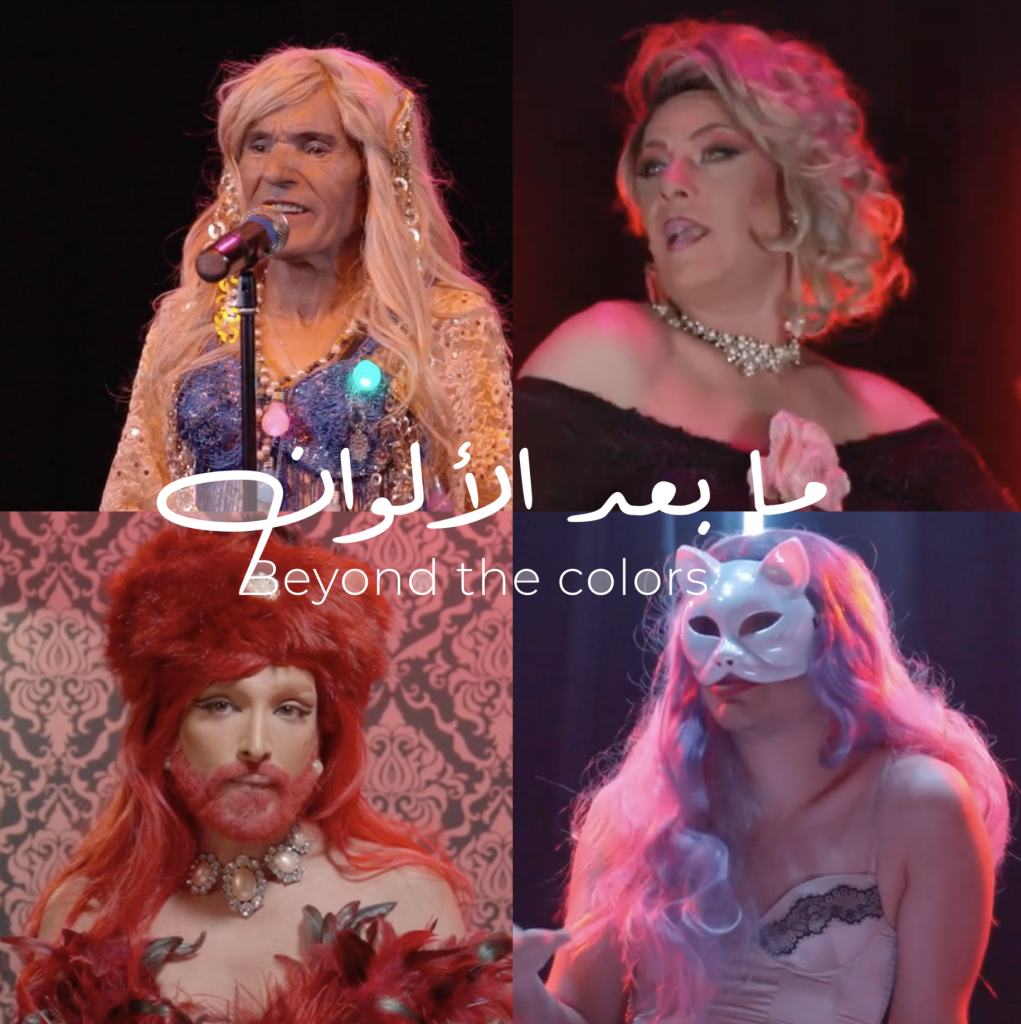
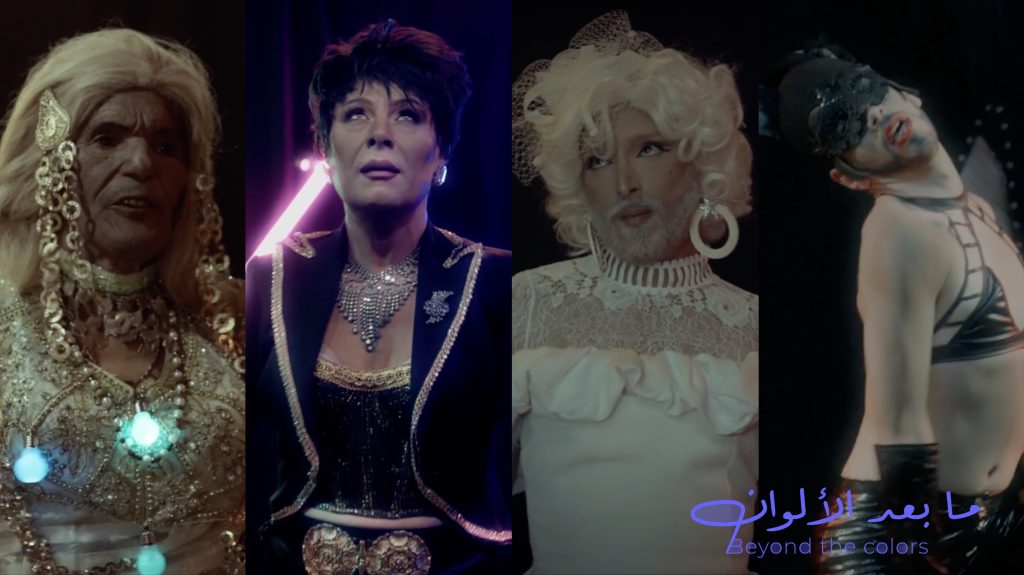
Blog Mawjoudin March 31, 2026 Beyond the Colors Queer in Art Production (EP03) The third episode of Season 2 of “Beyond the Colors” asks a fundamental question: How does an artist shape their identity and craft their art in a society that challenges them? “Beyond the Colors” is a podcast that documents and celebrates the diversity of human experiences in Tunisia. In this special season, we explore how the arts from writing to performance are used as a powerful tool for self-expression, defiance, and redefining mainstream narratives on identity and gender. Cast : Nada mezni Hfaiedh Ahmed Taya Bassen Ben Brahim Preparation & Interview : Karam Aouini,  Ali BousselmiExecutive Production : MOJA StudioDirected by: Anas ChattyDp : Ahmed Thabet  Camera operator : Amir BoufarouaSound Engineer : Hakim MidessaGaffer : Amir LahdhiriAssistant : Mourad SaadEditing : Anis MahjoubVFX : Houdheyfa NaffetiSubtitles :  Shayma LandolsiGraphic Design : Boshra JallaliEquipments : Digital IrisSpecial Thanks : Lobsters Prod, Digital Iris production   Production: Mawjoudin We Exist

Queer in art Production EP03 Read More »

Queer in Art Production EP02

Blog Mawjoudin March 31, 2026 Beyond the Colors Queer in Art Production (part2) The second episode of Season 2 of “Beyond the Colors” asks a fundamental question: How does an artist shape their identity and craft their art in a society that challenges them? “Beyond the Colors” is a podcast that documents and celebrates the diversity of human experiences in Tunisia. In this special season, we explore how the arts from writing to performance are used as a powerful tool for self-expression, defiance, and redefining mainstream narratives on identity and gender. Cast : Essia Jaïbi  Moncef Zahrouni Mourad Ben Cheikh Bochra Triki Preparation & Interview : Karam Aouini,  Ali BousselmiExecutive Production : MOJA StudioDirected by: Anas ChattyDp : Ahmed Thabet  Camera operator : Amir BoufarouaSound Engineer : Hakim MidessaGaffer : Amir LahdhiriAssistant : Mourad SaadEditing : Anis MahjoubVFX : Houdheyfa NaffetiSubtitles :  Shayma LandolsiGraphic Design : Boshra JallaliEquipments : Digital IrisSpecial Thanks : Lobsters Prod, Digital Iris production   Production: Mawjoudin We Exist in partnership with ETIHAD

Queer in Art Production EP02 Read More »

Queer in Art Production EP01

Beyond colors, Blog Mawjoudin September 19, 2025 Explore the first episode of season 2 of “Beyond the Colors”! This season highlights Queer representation in Tunisian artistic creation: authentic stories, bold works, and voices questioning the norms. Beyond the Colors Queer in Art Production (part1) Cast : Fadhel Jaïbi – الفاضل الجعايبي Noura Nefzi – نورة النفزي Mehdi Ben Attia – مهدي بن عطية Hatem Belhaj – حاتم بالحاج Preparation & Interview : Karam Aouini,  Ali Bousselmi Executive Production : MOJA Studio Directed by: Anas Chatty Dp : Ahmed Thabet   Camera operator : Amir Boufaroua Sound Engineer : Hakim Midessa Gaffer : Amir Lahdhiri Assistant : Mourad Saad Editing : Anis Mahjoub VFX : Houdheyfa Naffeti Subtitles :  Shayma Landolsi Graphic Design : Boshra Jallali Equipments : Digital Iris Special Thanks : Lobsters Prod, Digital Iris production Production: Mawjoudin We Exist

Queer in Art Production EP01 Read More »

Breaking Free & Facing Parents

For every Queer person, coming out is an accomplishment, an act of
emancipation. Weema*, aged 31, decides to come out and carve out an existence
for themselves that is not devoid of consequences, but certainly devoid of filters.
Indeed, standing up to his family, he chooses one day to take the lead in his own
life… for better or for worse.

Breaking Free & Facing Parents Read More »

The urgency to take action

When personal experience and convictions intertwine, militanty begins to take shape and struggles end up being structured. Salma El Masri lives in Cairo. She is executive director of Bedayaa Organization, which works to defend the rights of LGBTQI+ people. In recent years, as part of the team, she has been working hard to raise awareness among young Queer people about their drug use habits…

The urgency to take action Read More »

“In the course of my involvement, the cause has emerged”

Talking to her is not something you can do half-heartedly. Sondos Garbouj is a clinical psychologist, currently teaching psychology at the university. A profession that echoes the question of Gender / Human Rights / Feminism, which reflects her intersectional involvement. Practicing goes hand in hand with her unwavering support for minorities. In this interview, she talks about her involvement, which she advocates loud and clear.

“In the course of my involvement, the cause has emerged” Read More »

A story of wandering

After listening to his journey, he gives us complete freedom to present him, as our interlocutor treats with caution some terms that are commonly used such as “refugee”, “asylum seeker”, or even activist. “Ward” is his real first name, which he chose to put forward in order to overshadow another one that is more common, with a Muslim connotation, attributed by his family.

A story of wandering Read More »

A quest for oneself

One is not born oneself, one becomes one! or one persists in becoming one. Aspiring to a more just community life and having brandished the banner of individual freedoms at an early age, “Leil” soon came up against the hazards of a turbulent, often hostile existence, but one that continues to be lived to the fullest. Fights, dodging and a perpetual search for peace and reconciliation (un)shape his path.

A quest for oneself Read More »

Fragments of a queer life

If asked to introduce herself, Bochra Triki doesn’t know what to say. She cracks a smile, seems to be pondering and stays on the lookout for definitions thrown at her. “I am a feminist, Queer, it is a part of my identity which I try to deal with in a multidisciplinary way”. she says. A beautiful but brief presentation that considerably trim down an atypical career and a decade of her twenties devoted to the Queer and feminist cause in Tunisia. “Boch” is in her thirties and her rich experience speaks for itself…

Fragments of a queer life Read More »